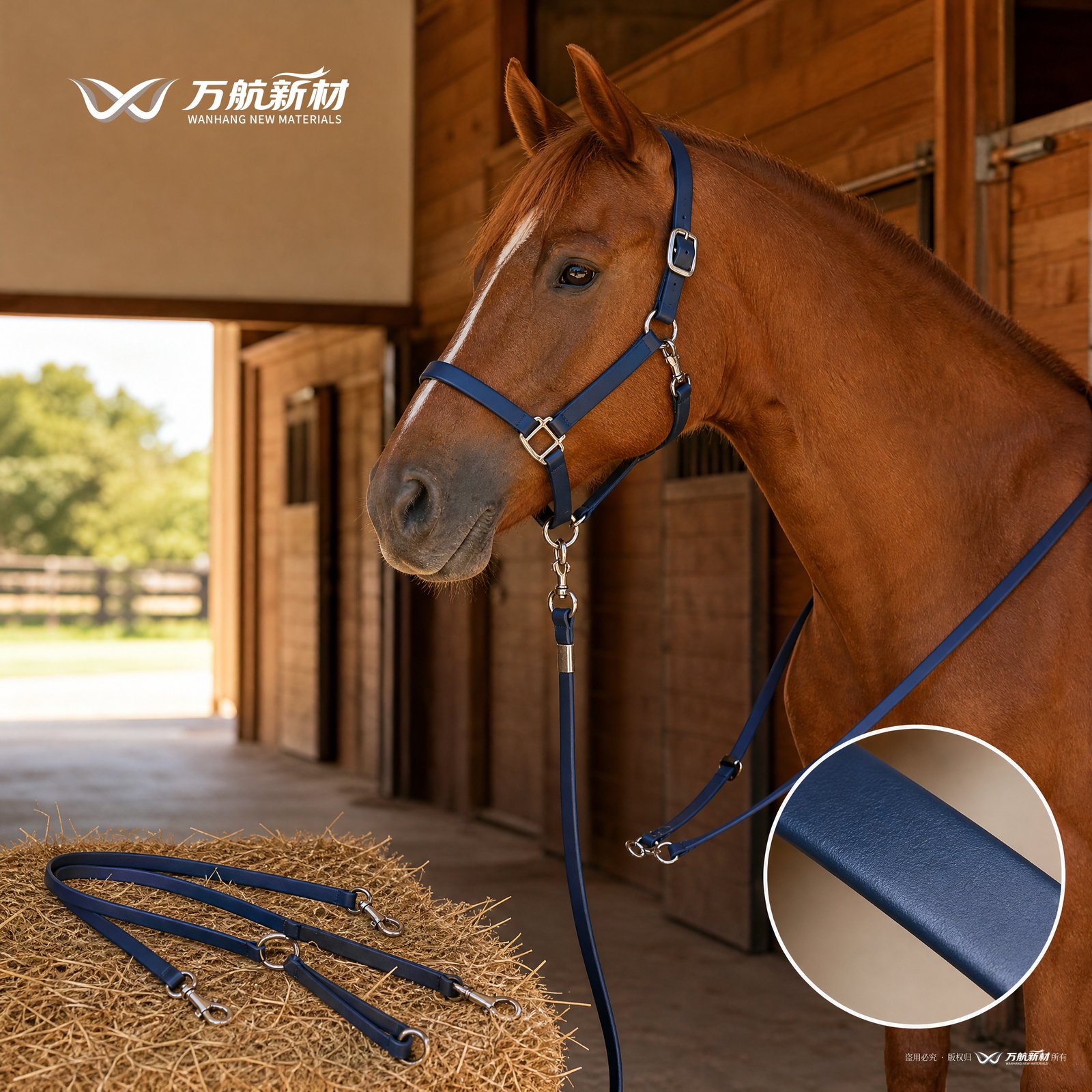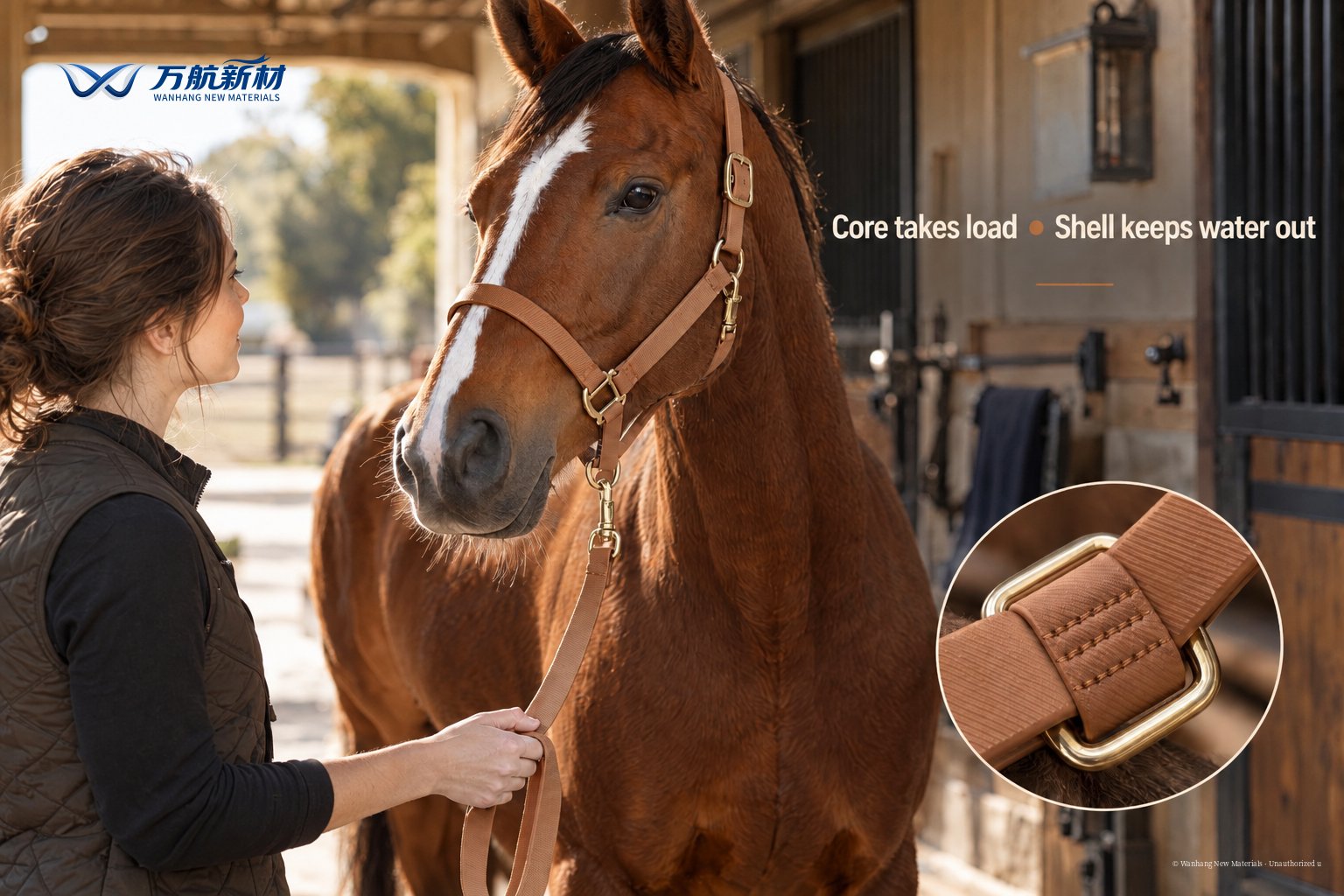
Equestrian gear
Tack endures tension, sweat and sun for long periods, and leather care is costly. Coated webbing has high tensile strength, resists sweat and sun and works in the rain, and is already widely accepted in the European and American equestrian community.
Products we can develop
Why use coated webbing
Waterproof and mold-resistant
The coating doesn't absorb water, so it won't mold even when constantly damp.
Wipes clean
Mud, sweat and seawater stay on the surface; one wipe and it's clean.
Weather-resistant and durable
Works from -30°C to 80°C and stands up to sun and rain.
High-frequency welding
Can be welded into a hole-free, seamless structure with no water leak points.
Why coated webbing suits horse tack
Horse tack carries sustained tension while facing sweat, rain, stable humidity and strong sun. Leather tack looks good but needs cleaning and oiling after every ride, and it molds and cracks if neglected. Nylon tack stiffens once it soaks up sweat and darkens with sweat stains. Coated webbing can be rinsed with water and used again once dry, and rainy rides are no problem.
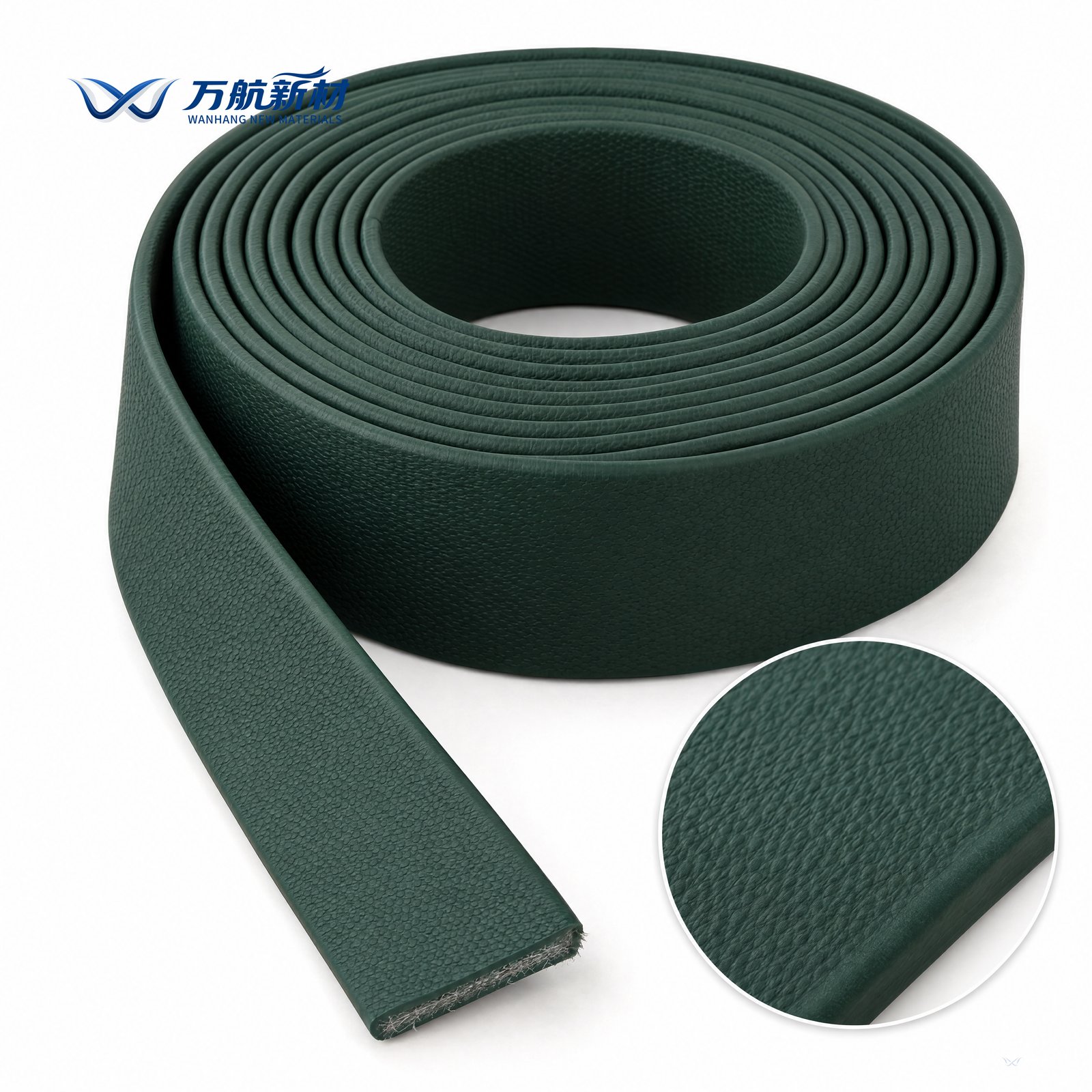
Coated webbing can also be embossed with a leather-look texture, close to leather from a distance while keeping the strength of the webbing core. This makes it common at endurance rides, daily training and equestrian clubs in Europe and the US.
Products we commonly develop
Reins, halters and bridles are the most common categories, followed by breast collars, stirrup leathers, bit straps and lead ropes. Tack demands high strength, so it generally uses thicker coated webbing 19–25 mm wide with stainless steel or brass hardware; load-bearing parts use high-frequency welding or dense stitching.
If you run a tack brand, the same colors and textures can extend to leads, key fobs and lanyards for horse owners, making a matching merchandise set.
What to watch for in development
Horse tack needs higher tensile strength than pet collars, so please confirm the use case and how the load is applied before ordering. We quote reference tensile strength by actual width and thickness, then verify with a sample tensile test. Horse sweat is salty, so choose corrosion-resistant hardware and UV-resistant polyester thread.
Recommended specifications
| Use | Recommended width | Recommended configuration |
|---|---|---|
| Reins / lead rope | 19–25mm | Thicker coating, leather-look texture optional |
| Halter / bridle | 19–25mm | Stainless steel or brass hardware |
| Chest strap / stirrup strap | 25–38mm | High-frequency welding or dense stitching |
The above are common reference values; final specifications depend on the application and sample testing.
Questions often asked in this area
Is coated saddlery strong enough compared with leather?
Strength is mainly determined by the webbing core. Tensile strength depends on the product and specification, and we confirm it with measured samples by width and thickness.
Can it look and feel like leather?
Can be embossed with belt-leather, lychee and other textures, in glossy or matte, with colors matched to Pantone.
What is the MOQ for horse tack?
Finished products: MOQ 500 pieces per color; if you buy only coated webbing to sew yourself, MOQ 500 meters per color.
Finished products we can make directly for this industry
Newly launched style; color, logo and size can all be customized.