Pet products
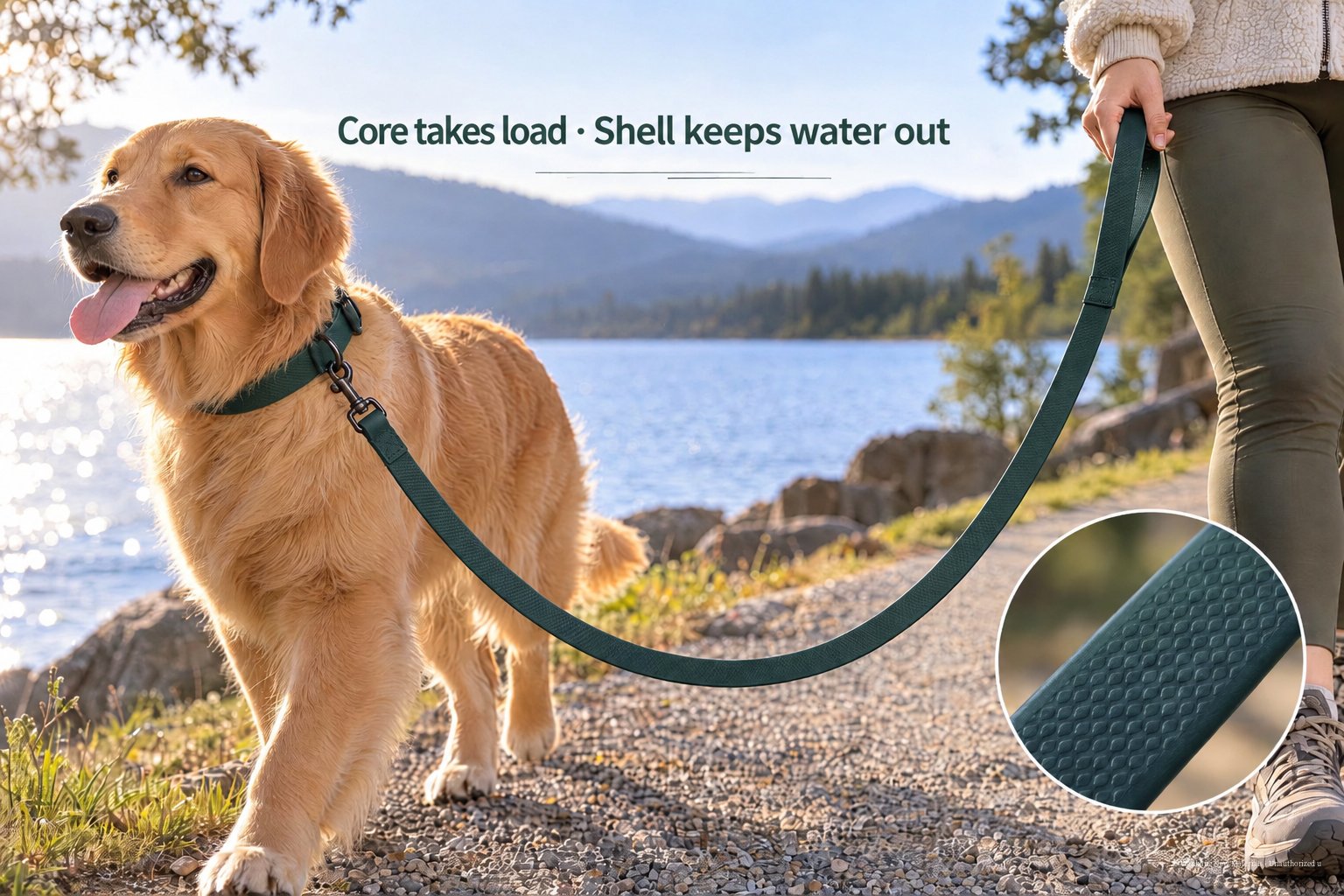
Dogs go out every day, and mud, rain and sweat take their turns. Nylon and leather straps absorb water, smell, fade and wear down, while coated webbing wipes clean, doesn't absorb water and doesn't mold, making it a common material for premium pet collars and leashes.
Products we can develop
Why use coated webbing
Waterproof and mold-resistant
The coating doesn't absorb water, so it won't mold even when constantly damp.
Wipes clean
Mud, sweat and seawater stay on the surface; one wipe and it's clean.
Weather-resistant and durable
Works from -30°C to 80°C and stands up to sun and rain.
High-frequency welding
Can be welded into a hole-free, seamless structure with no water leak points.
Why more pet collars are made with coated webbing
Dogs go out two or three times a day, and their collars and leashes face mud, rain, saliva and sweat. Nylon webbing has gaps between its fibers, so dirt and moisture work their way in, and within weeks it stiffens, smells and fades. Leather hates water and warps and cracks after a soak. Coated webbing has a continuous PVC or TPU shell, so water and mud stay on the surface and a damp cloth at home restores it.
For brands, this means fewer negative reviews about odor, color bleeding and stiffness, plus a selling point you can state clearly: waterproof, doesn't smell, easy to clean. It is also why coated collars generally sell for more than ordinary nylon collars in Europe and the US.
How a product line is usually put together
Most pet brands start with two pieces, collar + leash, keeping color, texture and hardware consistent, then gradually add harnesses, poop bag holders, ID tags and gift boxes. Because the whole set uses the same batch of webbing, colors are matched from the source, so you won't get a collar and leash that differ by half a shade.
Common customization points: strap color (standard colors or Pantone matching), surface texture (12 options), Logo method (screen printing, heat transfer, embossing, laser engraving on hardware, etc.), hardware material and color, and packaging (OPP bag, hang card or branded color box).
Three things most easily overlooked when buying
First, match width to dog type: 15–20 mm is enough for small dogs, medium-large dogs generally start at 25 mm, and for large dogs or dogs that pull we suggest 25–38 mm with thickened hardware. Second, hardware: zinc alloy is good value, aircraft aluminum is light, and brass resists corrosion but is heavier; for dogs that often swim in the sea, choose a style with better rust protection. Third, edges: the coating must fully wrap the core webbing's edges, and cut ends should be heat-sealed or edge-bound, otherwise the edges fray first.
Recommended specifications
| Use | Recommended width | Recommended configuration |
|---|---|---|
| Small dogs / cats | 15–20mm | PVC or TPU, lightweight hardware |
| Medium dogs | 20–25mm | PVC for volume, TPU softer in winter |
| Large dogs / pullers | 25–38mm | Thicker coating + reinforced hardware |
| Outdoor dogs that love water | 20–25mm | Rust-resistant hardware, reflective or glow-in-the-dark optional |
The above are common reference values; final specifications depend on the application and sample testing.
Questions often asked in this area
Will a coated collar be stiff and rub the neck?
The coating has some stiffness, so a new collar is slightly firmer than nylon and softens after a few days of wear. TPU is softer than PVC and stays soft at low temperatures; with rounded edges it won't fray.
What is the minimum order for pet collars?
MOQ 500 pieces per color; sizes can be mixed within the same color.
Can I get samples first to feel the material?
Yes. We don't keep stock; samples are made to order, about 4 days for webbing/tubing and about 10 days for finished products.
Related products
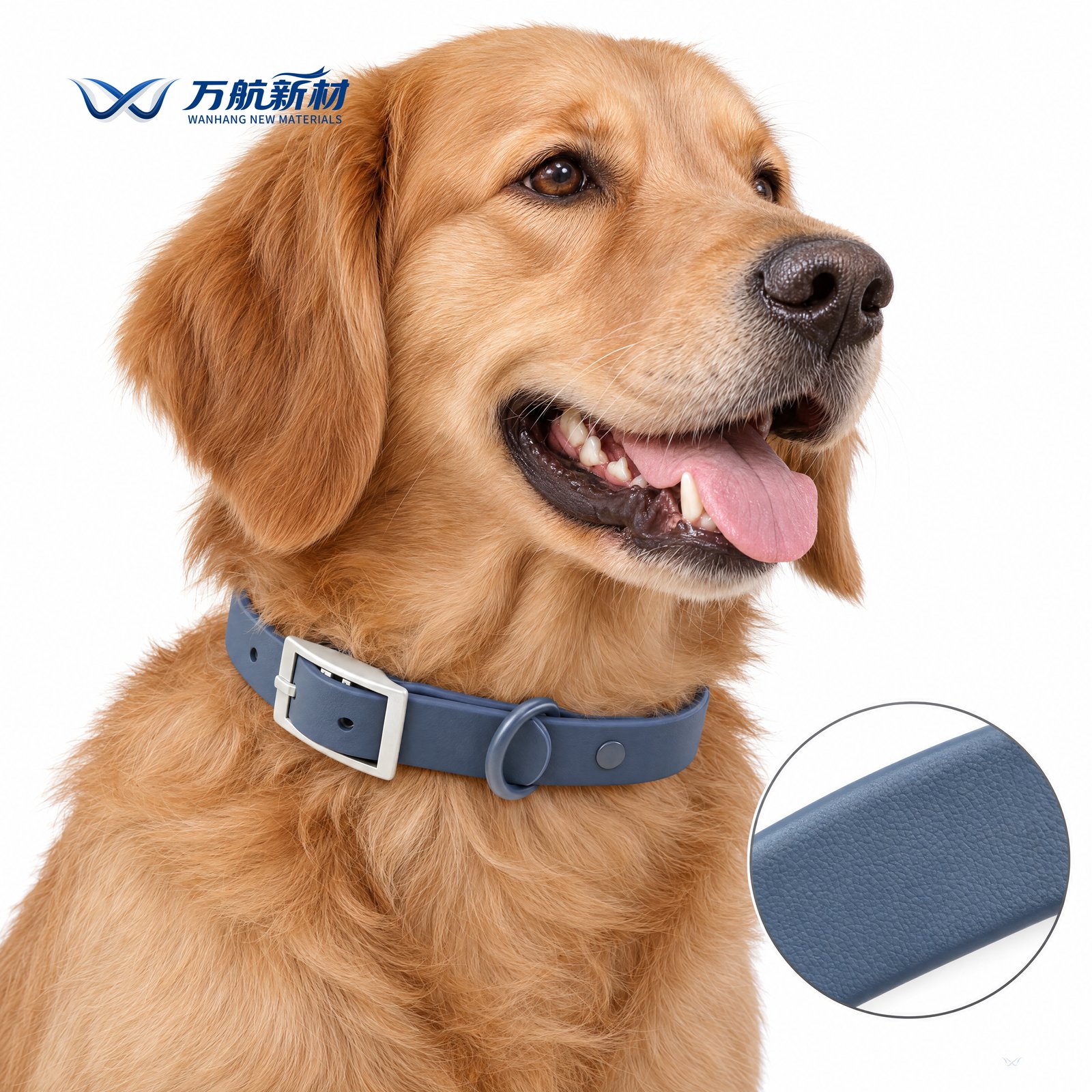
PVC-coated dog collar (adjustable)
Waterproof PVC-coated dog collar, printable with your logo. Adjustable S/M/L, 12 textures, about 10 days for samples.
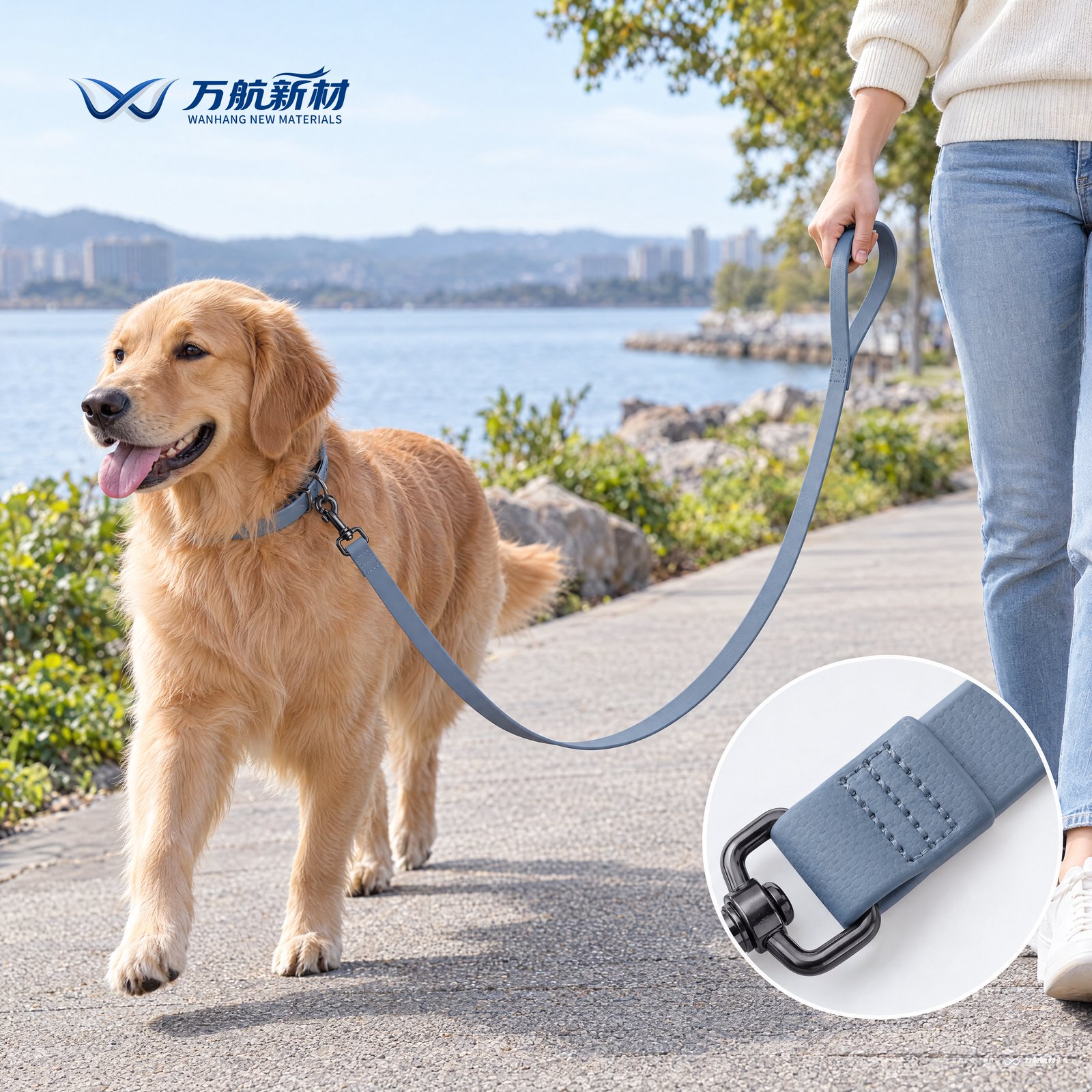
Waterproof dog leash (fixed length)
PVC-coated waterproof dog leash at factory-direct prices. 1.2 m / 1.5 m / 1.8 m, low MOQ, about 10 days for samples.
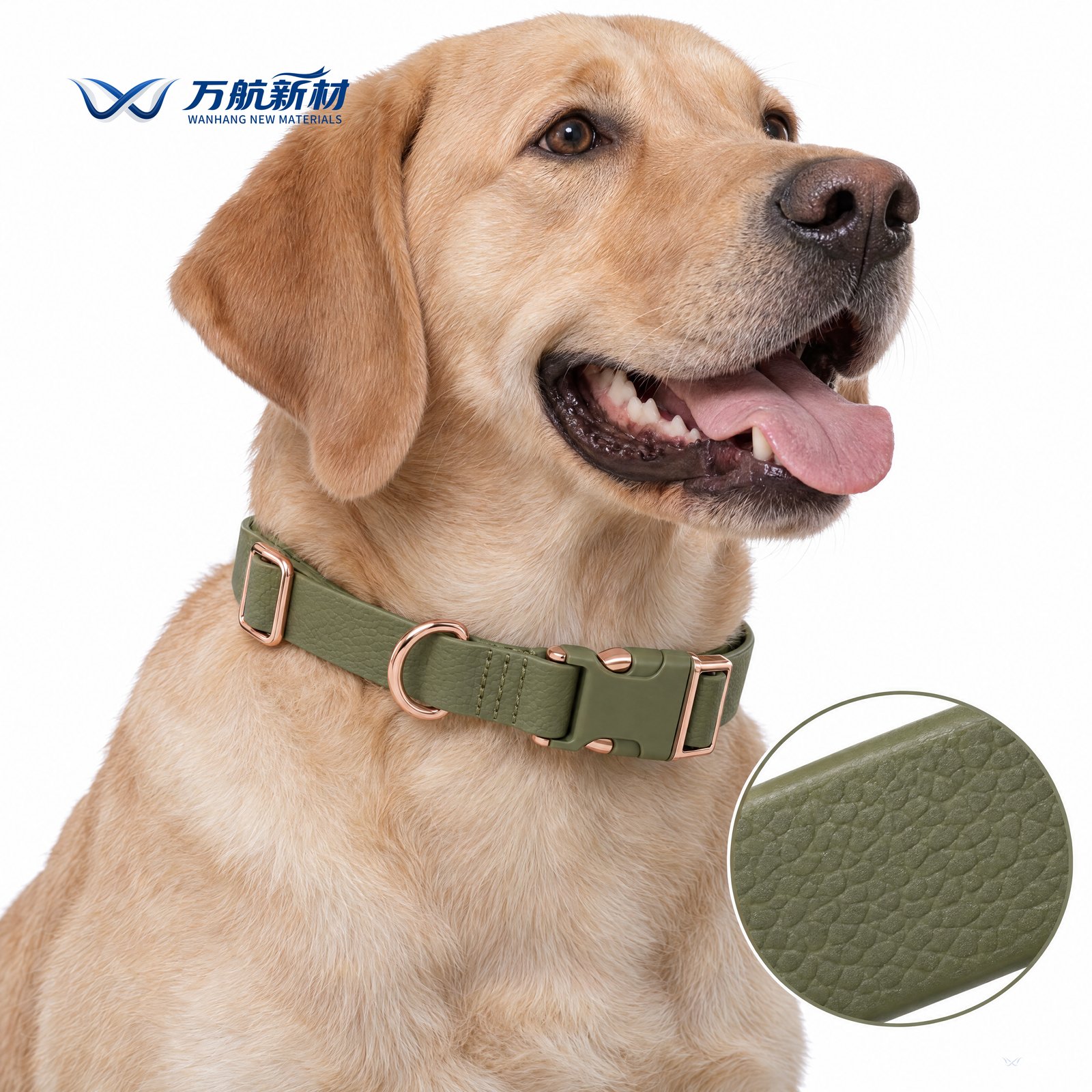
Collar + leash gift set
Matching collar + leash in a retail gift box. Private label and custom packaging, MOQ 500 pcs per color.
Finished products we can make directly for this industry
Newly launched style; color, logo and size can all be customized.
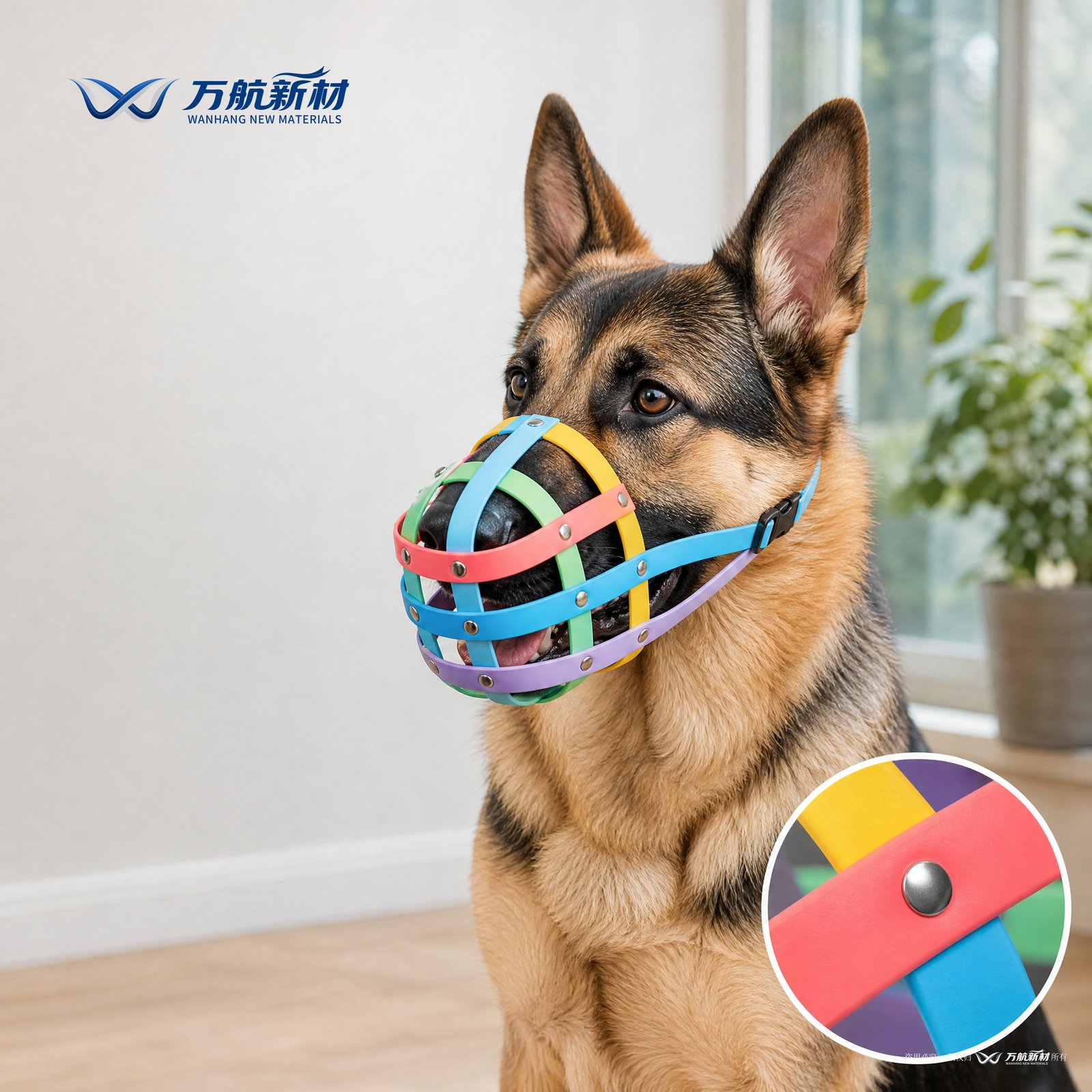
Color-block dog muzzle
Cage-style open dog muzzle woven from PVC-coated webbing; lets the dog pant and drink; multi-color color-blocking, logo printable.
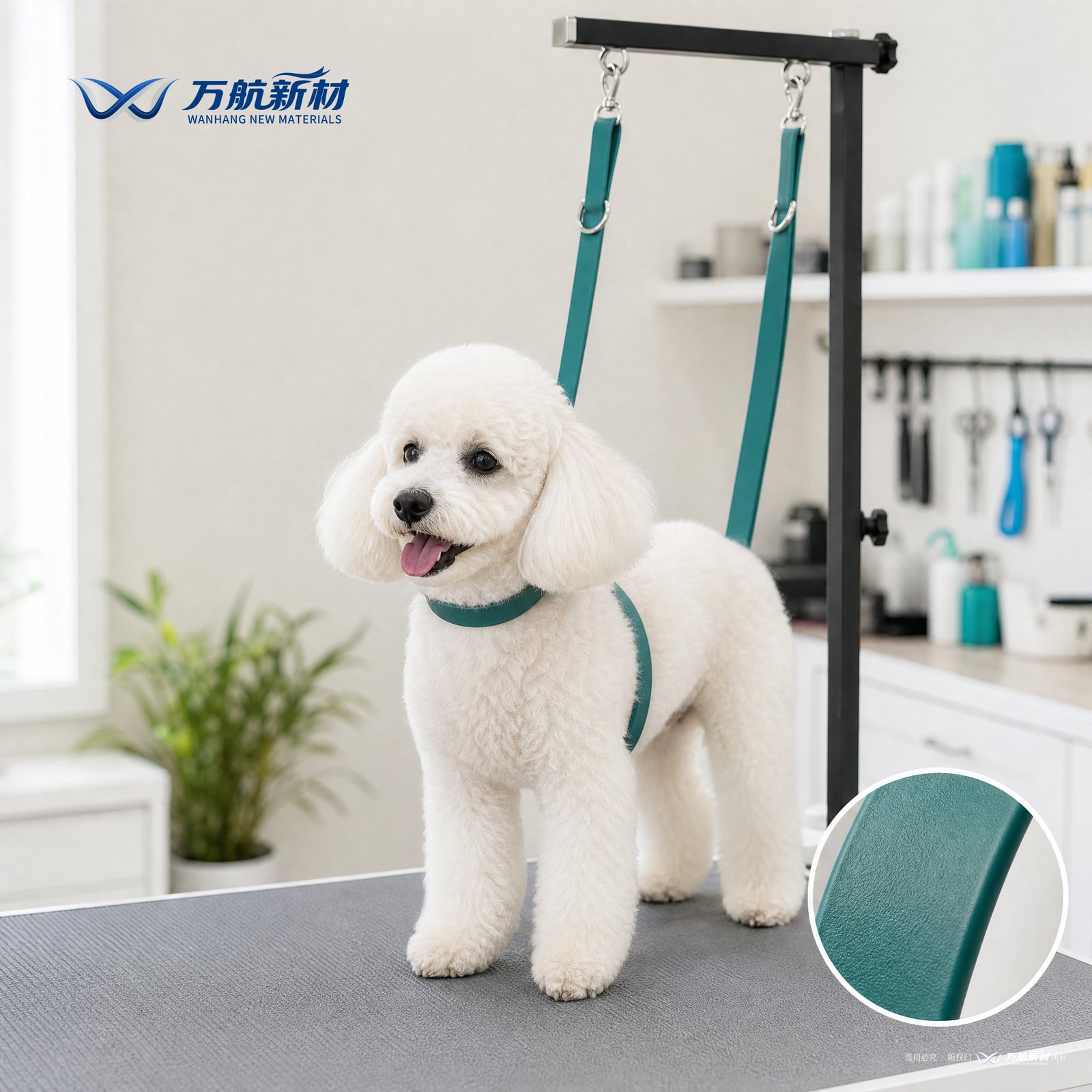
Three-piece pet grooming restraint set
Holding straps that hang from the grooming table arm during bathing, trimming and drying: a neck strap, a belly support strap and a hind-leg loop in a three-piece set. Coated and waterproof, they don't get slippery when wet.
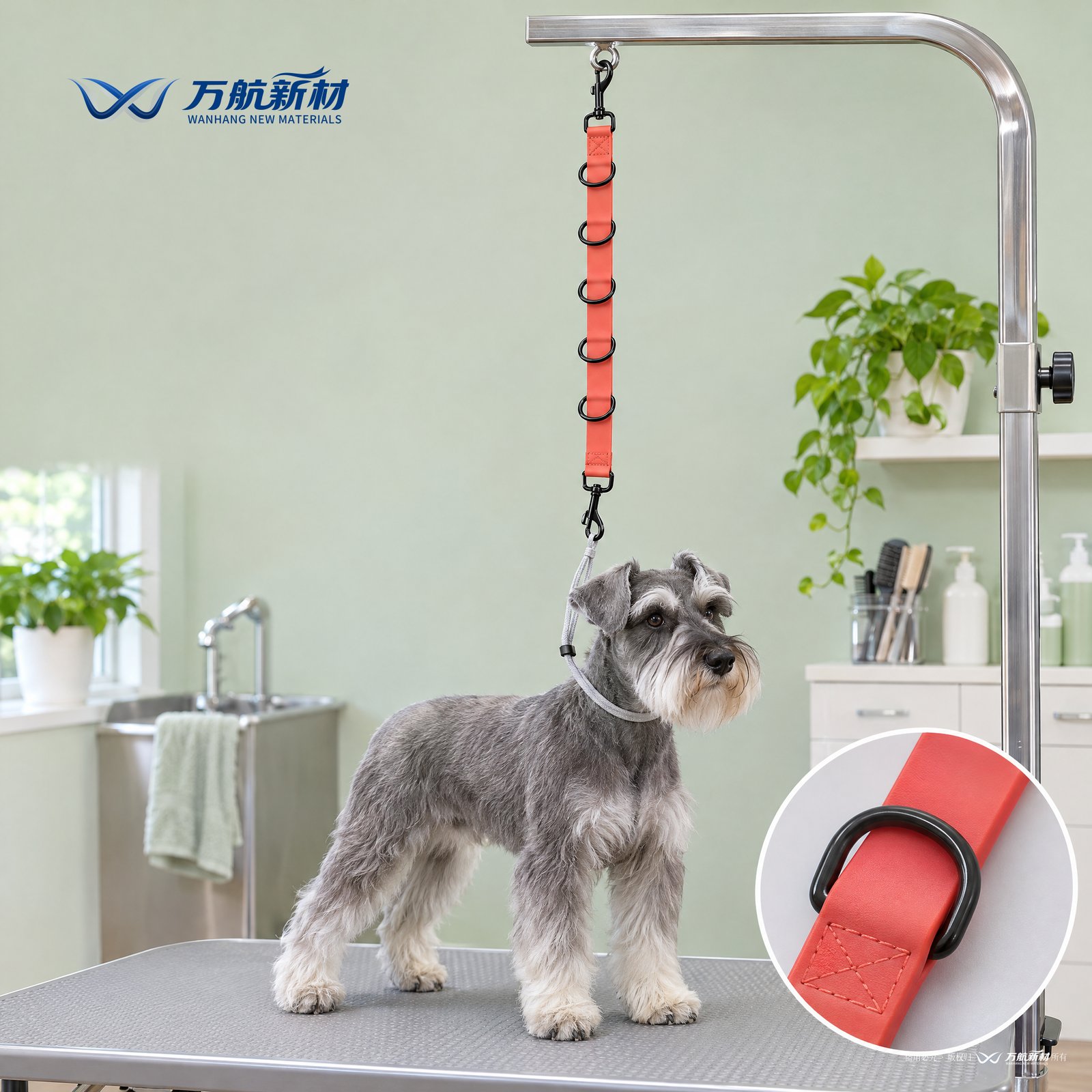
Grooming table hanging strap
A multi-D-ring extension strap that hangs from a grooming arm or bathtub hook, with a swivel hook at each end; the grooming loop clips onto whichever D-ring sets the right height, so you don't need to readjust the arm for each dog; the coated strap doesn't absorb water.
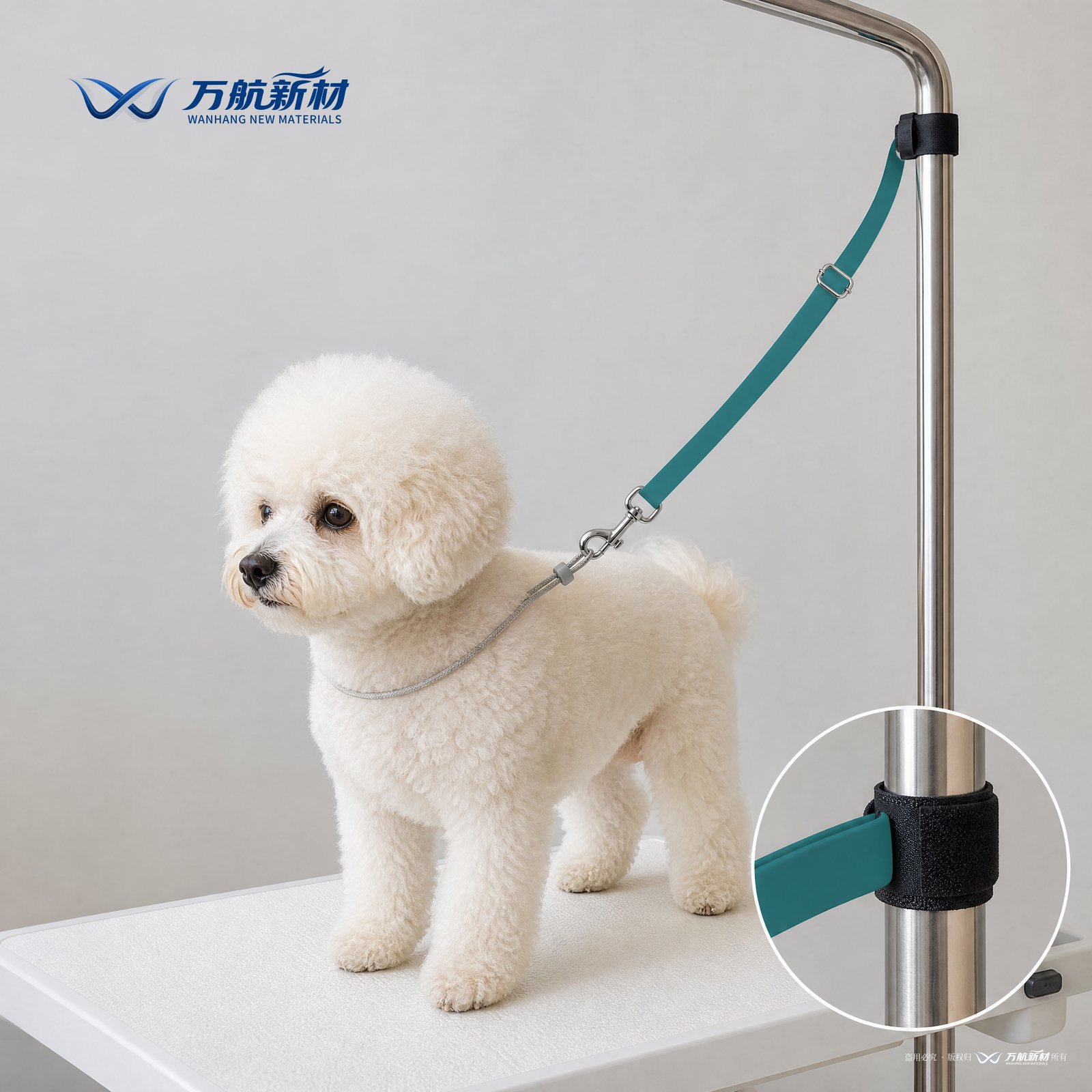
Grooming arm extension strap
Hook-and-loop at one end wraps around the grooming arm post, and a swivel hook at the other clips to the grooming loop, keeping the pet a distance from the post so it doesn't touch it during trimming.