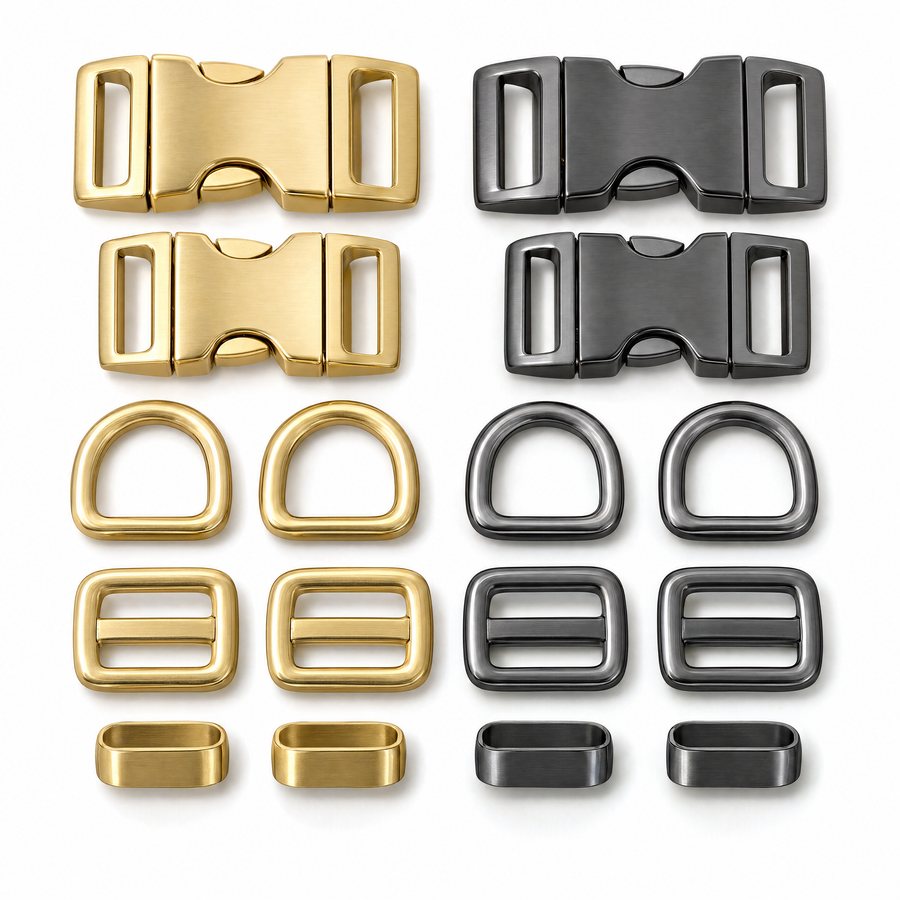
How to choose collar hardware: zinc alloy, aviation aluminum, brass or plastic buckles
The pros and cons of four common hardware materials, and how to combine them by product positioning.
In this article (6 sections)
When a collar or leash fails, nine times out of ten it's the hardware. Choose hardware on three points: strength, weight and corrosion resistance.
Zinc alloy
The most common. It can be die-cast into all kinds of shapes, with many plating colors and moderate cost. The downside is that it is heavier, and the plating may have problems after long soaking in seawater.
Aviation aluminum
Light, strong and corrosion-resistant, suited to outdoor, water-play and large-dog products, and also feels more premium. Costs more than zinc alloy.
Brass
Best look and feel, and it gets better with use. Suits a vintage or understated-luxury style. Heavier and more expensive.
POM plastic side-release buckle
Light, cheap and rustproof, suited to small dogs, cats and entry-level styles. Not as strong as metal, so use with caution on large dogs.
Surface finish
Six or more plating colors are common, including bright, matte, gunmetal and gold. Hardware can also be laser-engraved with your logo, a low-cost way to lift your brand's look.
How to pair them
Volume models: zinc alloy or POM. Outdoor water-use models: aircraft-grade aluminum. Premium models: brass or gold plating. If you're unsure, we can sample one of each so you can compare them in hand.
Related tutorials
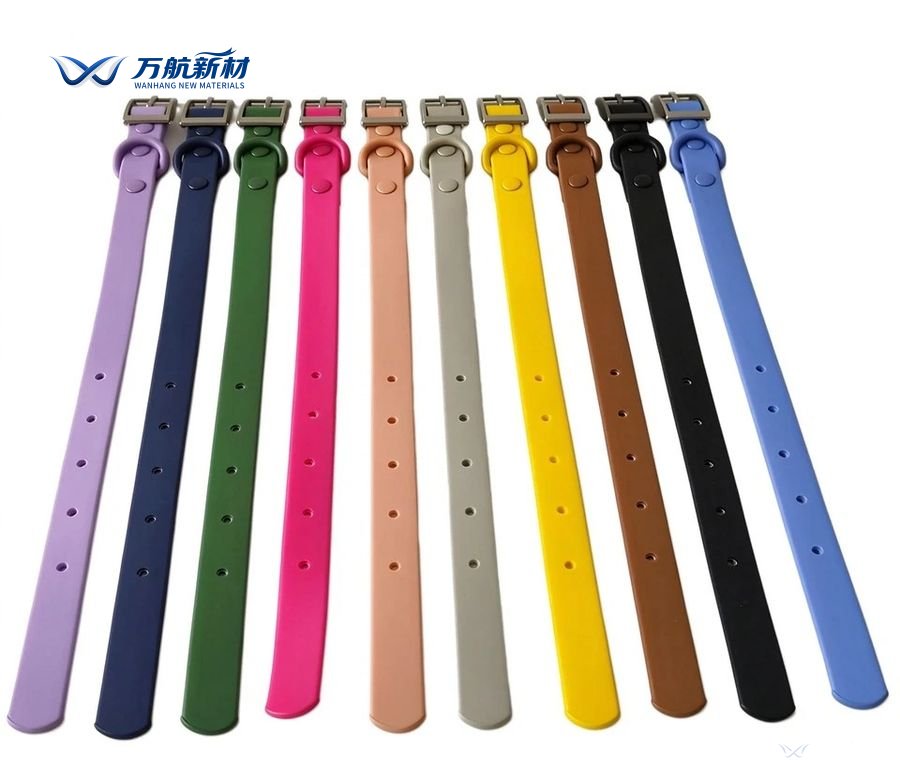
How to measure a dog collar: which dogs fit S, M and L
How to measure the neck and choose a size, with the size chart for our adjustable collars.
Read the full article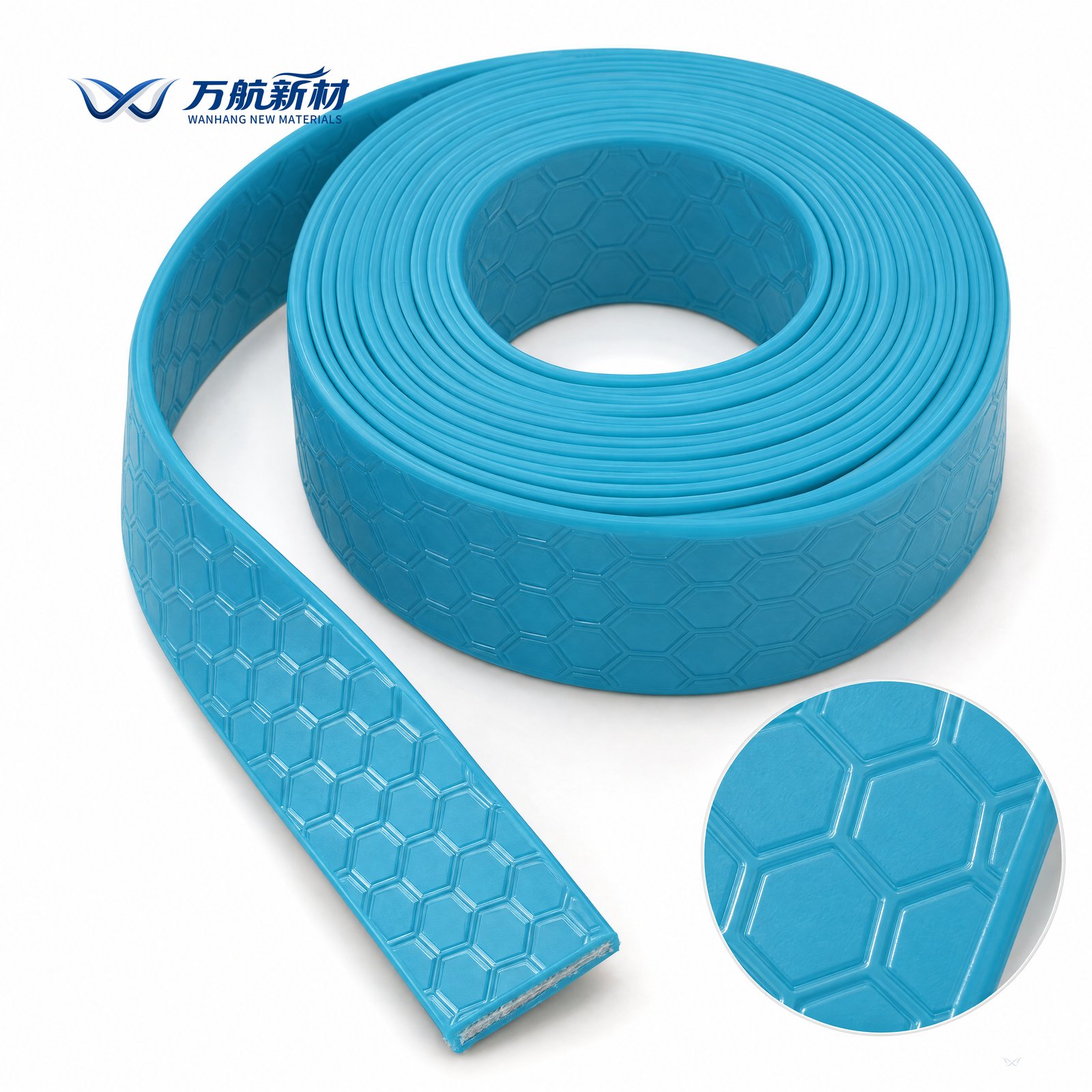
How to choose webbing width: a reference by dog size
Which dogs suit 15 mm, 20 mm and 25 mm, and how width relates to strength and feel.
Read the full article