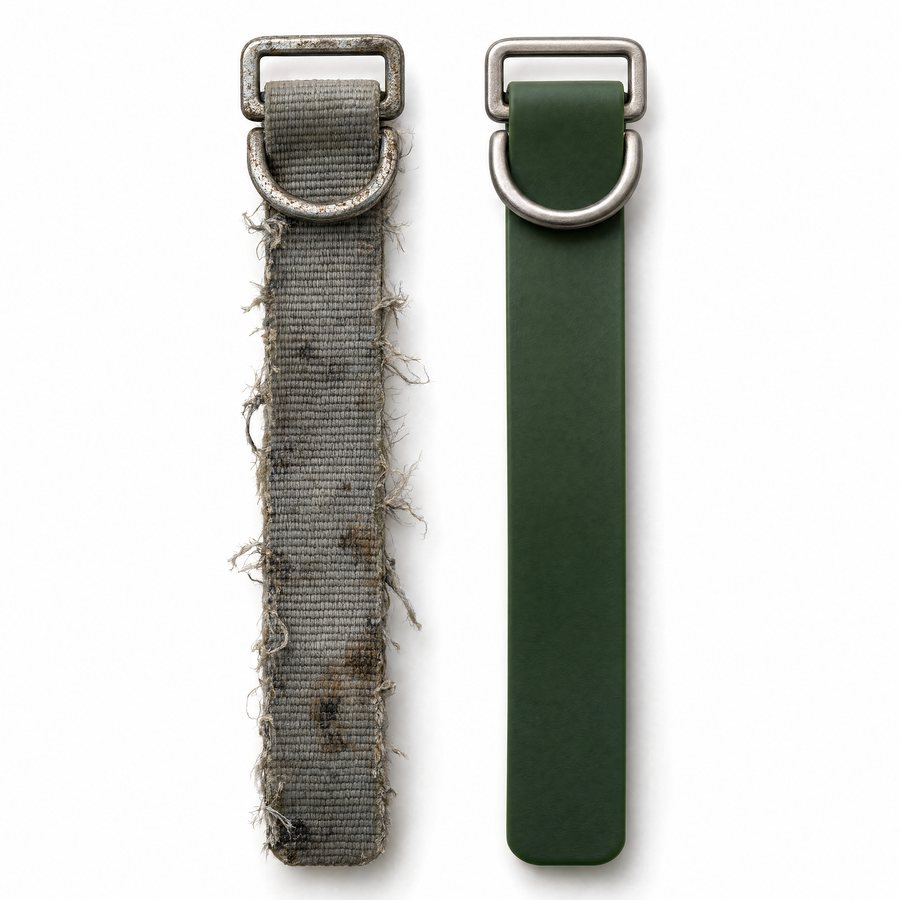
Why coated webbing beats nylon in muddy conditions
Why do nylon collars smell and stiffen? How does the structure of coated webbing solve this? Which uses is it suited to?
In this article (4 sections)
Most dog owners know this: a new nylon collar starts to smell after two months, no amount of washing removes it, and it gets stiffer and stiffer. That isn't a quality defect; it comes from the structure of the material itself.
Why nylon smells
Nylon webbing is woven from individual fibers, with countless tiny gaps between them. Muddy water, sweat and saliva seep in through those gaps. The surface looks dry, but the inside stays damp and bacteria move in, so the smell won't wash out. Once mud and sand dry inside the fibers, the strap turns hard and fuzzy.
How coated webbing solves it
Coated webbing has a continuous layer of PVC or TPU wrapped completely around the webbing. The shell has no seams, so dirt stays on the surface and can't get inside. That's why it doesn't absorb water, mildew or hold odors, and a wet cloth wipes it clean in seconds.
The webbing core inside still carries the load, so there is no loss of strength; the shell can also be embossed with leather, snake and other textures for a look that feels richer than nylon.
Best-fit use cases
The test is simple: used often + gets dirty easily + hard to clean. If two of the three apply, consider coated webbing.
The most typical are dog collars and leashes: every day out, stepping in mud in the rain, playing in water at the beach. Beyond that, horse tack, working dog gear, diving weight belts, off-road tow straps, camping tie-downs, medical care straps... wherever the setting has mud, sweat or seawater, coated webbing suits better than nylon or leather.
Any downsides?
Yes. Coated webbing is slightly heavier than nylon of the same spec and costs a bit more; PVC versions get stiffer below freezing (choose TPU in that case). But for products that need to be easy to care for, that trade-off buys fewer negative reviews and returns.
Want to compare them yourself? We can send a comparison sample of coated webbing and nylon webbing. Soak them, smear them with mud, wipe them clean, and see for yourself.
Related tutorials
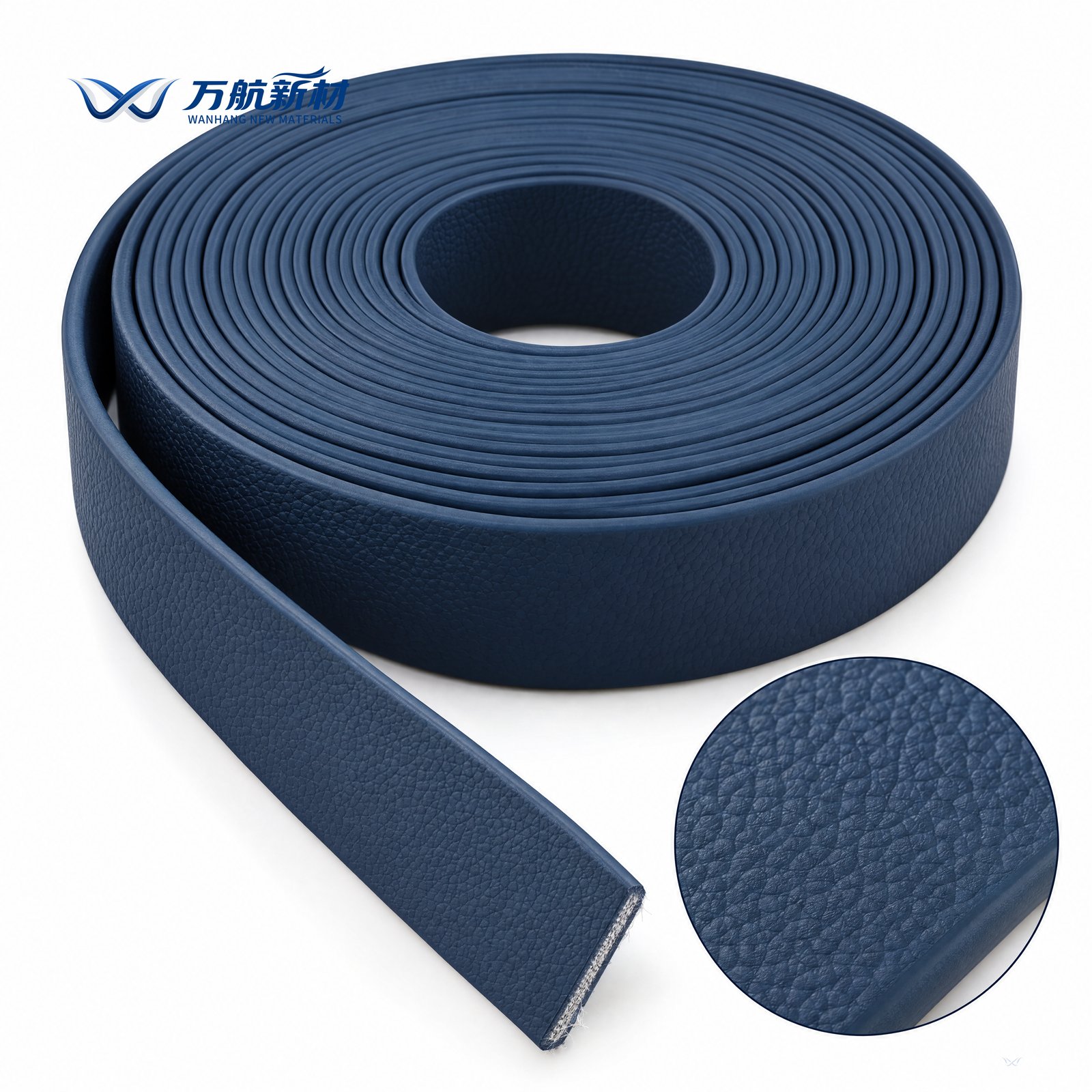
What is coated webbing, and how does it differ from nylon, leather and BioThane
One article covering the structure, pros, cons and common uses of coated webbing.
Read the full article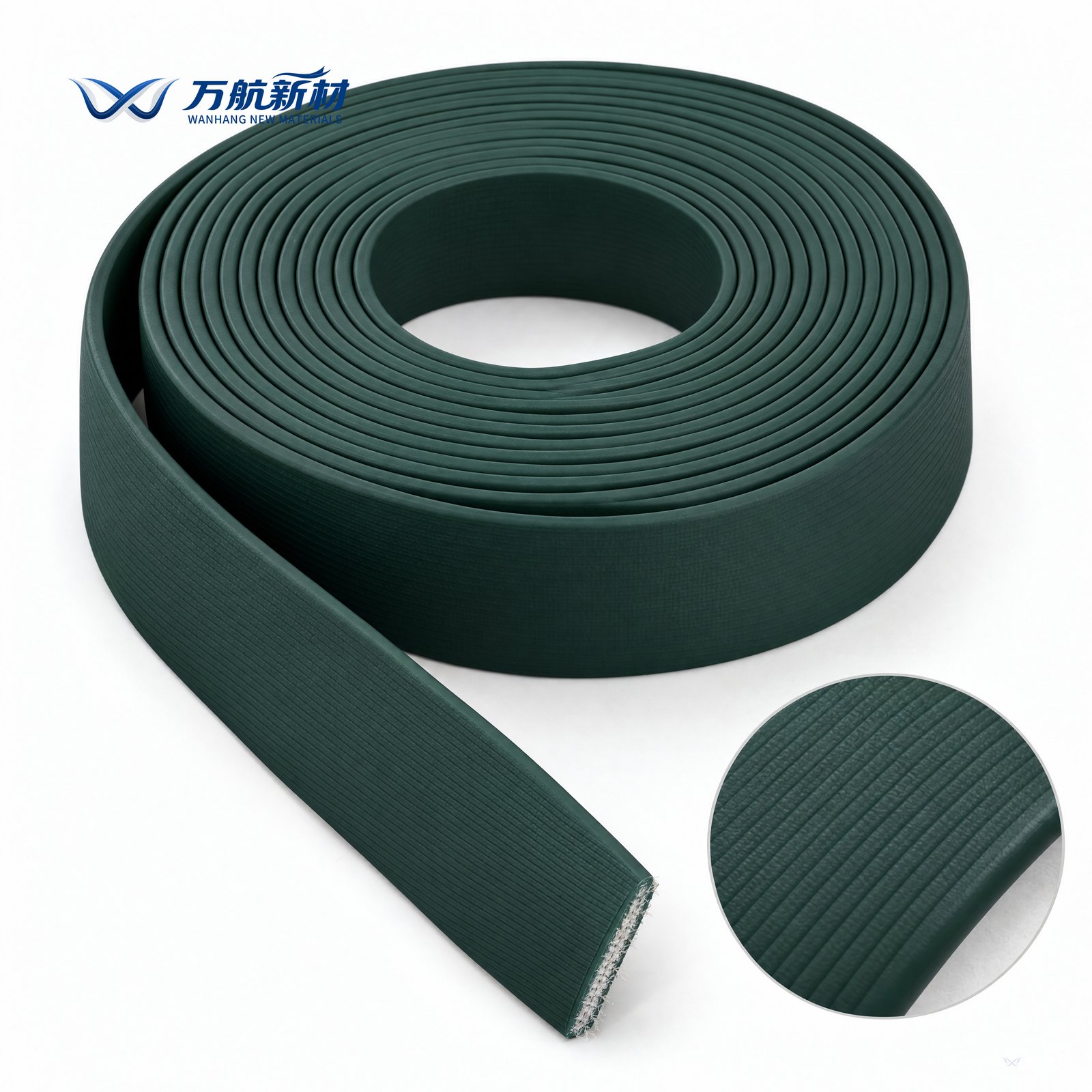
PVC, TPU or BioThane? How to choose the coated material for a pet product line
How the three coated materials differ in waterproofing, strength, low-temperature feel, compliance and price, and how to choose by target market.
Read the full article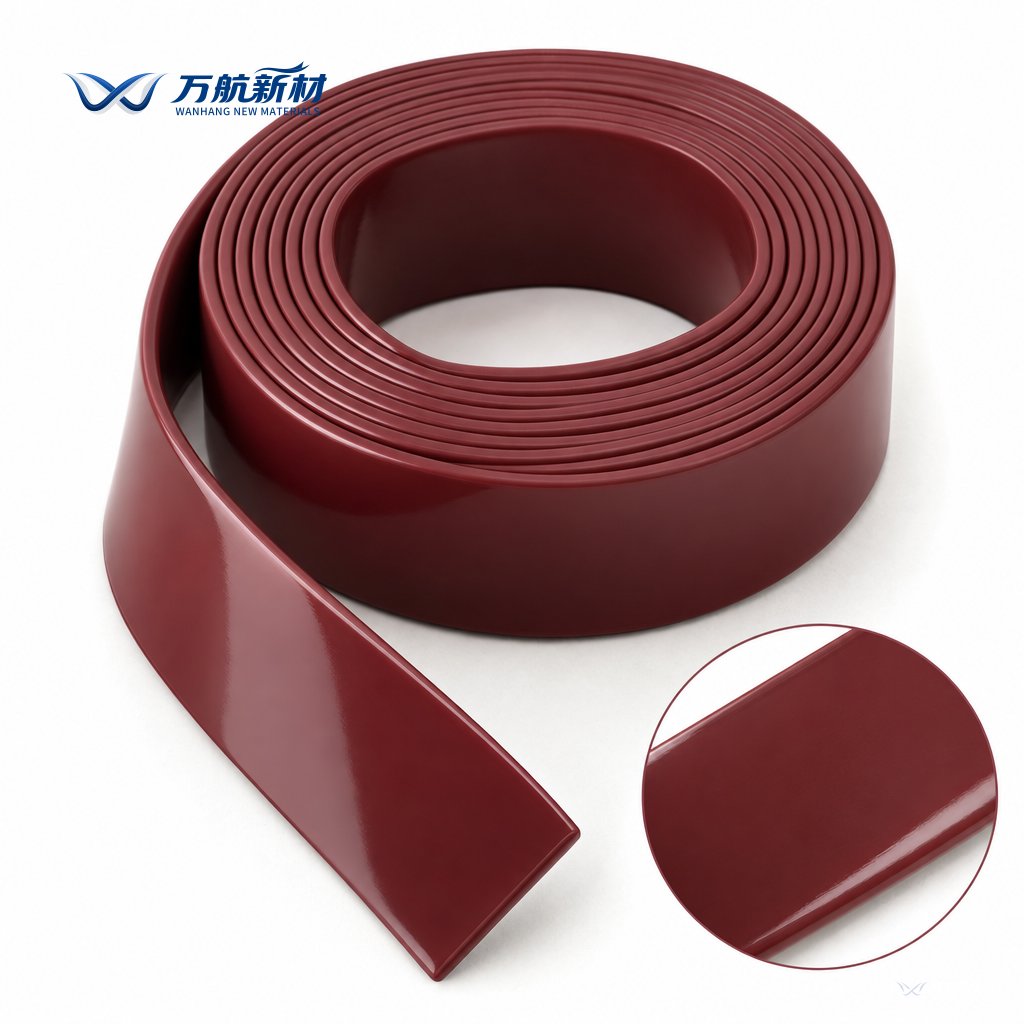
How to tell whether coated webbing is good quality
Check the thickness, check the color, check the edges, smell it, fold it, ask for the report: 6 simple methods.
Read the full article